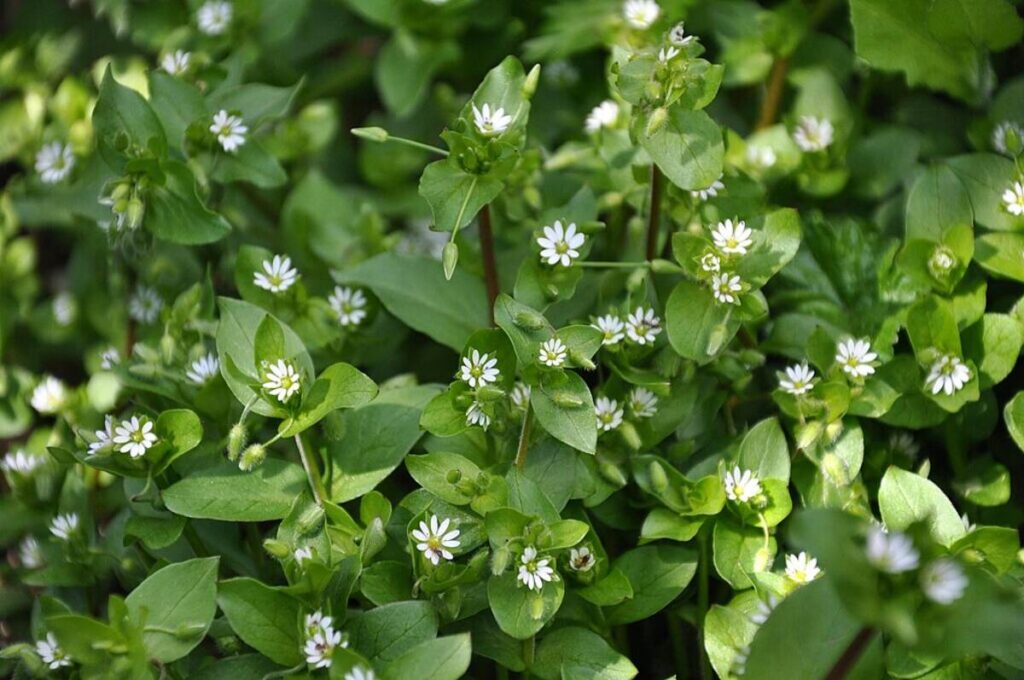
Chickweed may look like a harmless little groundcover with its tiny white star-shaped flowers, but don’t be fooled—it’s one of the most aggressive weeds in lawns and gardens. Once established, it spreads quickly, creating dense mats that choke out grass and other plants. Chickweed reproduces by seed and creeping stems, which makes it a persistent nuisance if left unchecked.
The good news? With the right approach, you can stop chickweed from spreading and prevent it from taking over your yard. Here’s a comprehensive guide to identifying chickweed, understanding why it spreads so rapidly, and the most effective strategies to control it.
What Is Chickweed?
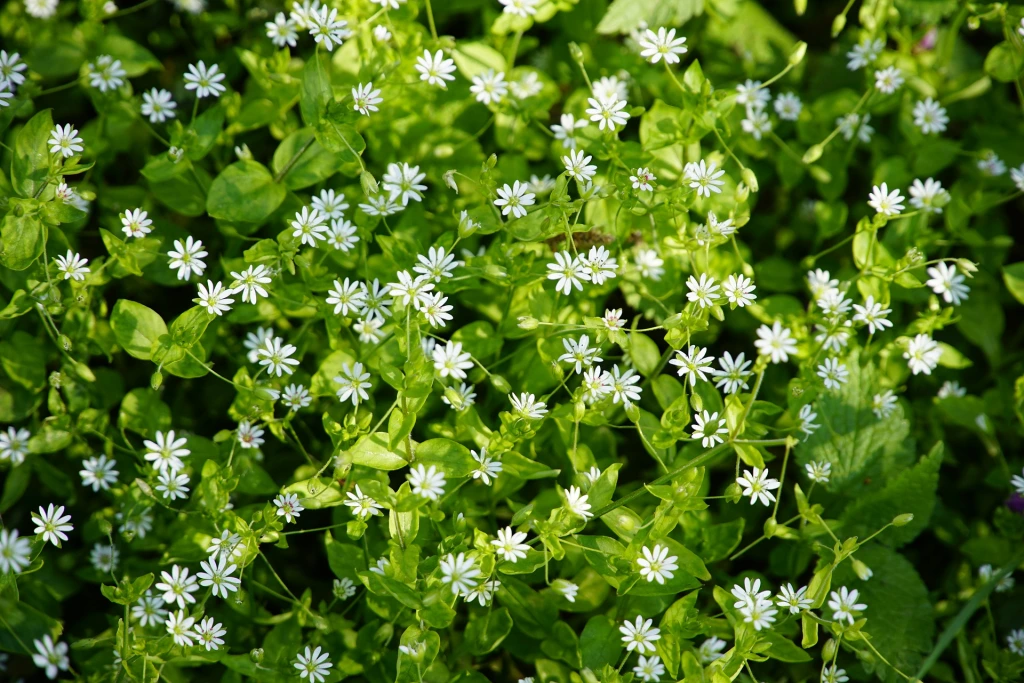
There are two main types:
- Common chickweed (Stellaria media): A low-growing annual that thrives in cool, moist conditions.
- Mouse-ear chickweed (Cerastium vulgatum): A perennial type with slightly hairy leaves and stems.
Both varieties grow quickly, forming thick mats that outcompete desirable plants. They flower and set seed in as little as 5 weeks, and each plant can produce up to 15,000 seeds, many of which remain viable in the soil for years.

Why Does Chickweed Spread So Fast?
- Prolific seeding: Seeds germinate almost year-round in mild climates.
- Creeping stems: Chickweed roots easily at the nodes, expanding outward like a carpet.
- Cool-season growth: It thrives in spring and fall when lawns are weaker.
- Moist, shady areas: Poor drainage and compacted soil give it a competitive advantage.
Understanding these factors is key to stopping chickweed before it becomes a major problem.
Step 1: Identify Early and Remove by Hand

Chickweed is easiest to control when young. Look for:
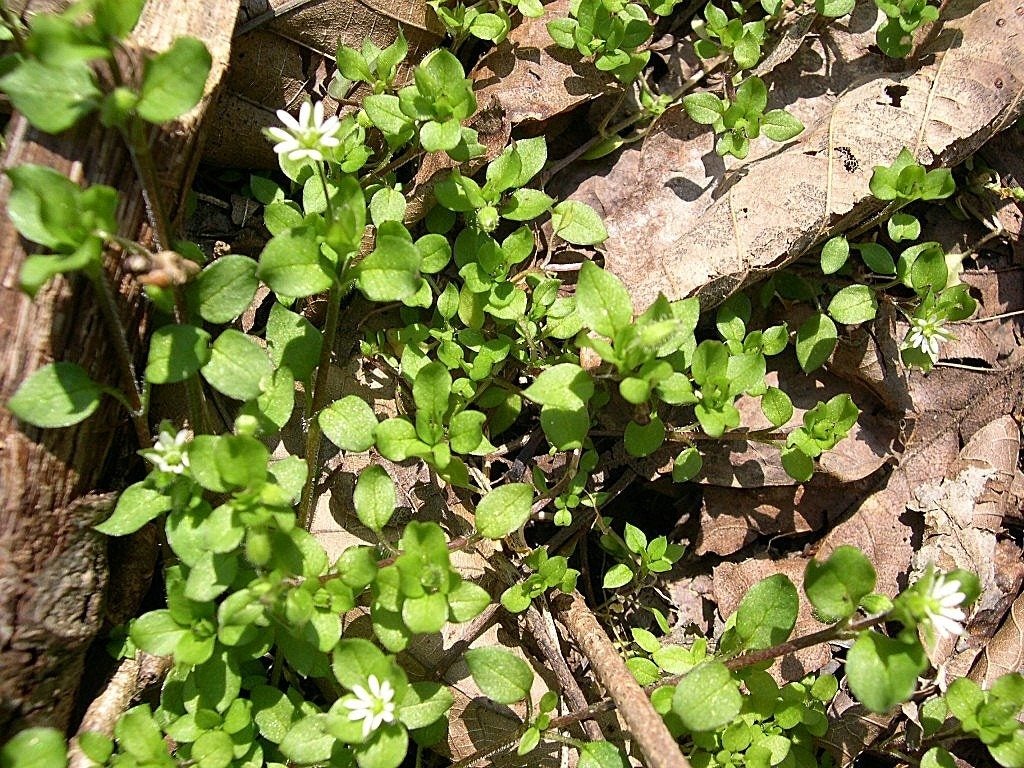
- Small oval leaves in opposite pairs
- White, star-shaped flowers with five deeply cleft petals
- Creeping stems that snap easily
Hand-pulling tips:
- Pull before it flowers and sets seed.
- Water the area beforehand to loosen soil.
- Grab stems close to the base and pull gently to remove roots.
- For larger patches, use a hoe or hand weeder.
Be thorough—any roots left behind may regrow.

Step 2: Smother With Mulch
For chickweed in garden beds, mulching is an effective barrier.
- Apply 2–3 inches of organic mulch (wood chips, straw, or shredded leaves).
- Mulch blocks sunlight, preventing seeds from germinating.
- For persistent patches, use cardboard or landscape fabric under mulch for added control.
This method not only stops chickweed but also improves soil health.
Step 3: Improve Lawn Health
A strong, healthy lawn is your best defense against chickweed. Here’s how:
- Mow high: Keep grass at 3–4 inches to shade the soil and suppress weeds.
- Fertilize wisely: Apply slow-release fertilizer in spring and fall.
- Overseed bare spots: Thick turf leaves no room for weeds to establish.
- Aerate soil: Reduces compaction and improves drainage, making conditions less favorable for chickweed.
When your lawn thrives, chickweed has fewer opportunities to spread.

Step 4: Water Smartly
Chickweed loves moist, poorly drained soil. To limit its growth:
- Water deeply but infrequently, about once a week.
- Fix drainage issues in problem spots.
- Avoid overwatering shady areas.
Less moisture on the soil surface means fewer chickweed seedlings.
Step 5: Use Organic or Chemical Controls (If Necessary)
For stubborn infestations, you may need stronger solutions.
Organic options:

- Corn gluten meal: Works as a pre-emergent herbicide, preventing seeds from germinating.
- Vinegar sprays: Effective on young plants but may harm surrounding vegetation.
Chemical options:
- Selective broadleaf herbicides (containing 2,4-D, MCPP, or dicamba) target chickweed without damaging most turfgrasses.
- Apply in early spring or fall when chickweed is actively growing.
Always follow label instructions carefully and use chemicals as a last resort.
Step 6: Prevent Future Spread
Stopping chickweed once is only half the battle—you also need to prevent its return.
- Monitor regularly: Scout your lawn and beds for early seedlings.
- Clean tools: Don’t transfer chickweed seeds from one area to another.
- Avoid bringing in contaminated soil or mulch.
- Keep edges tidy: Chickweed often sneaks in along fence lines, driveways, and garden borders.
Consistency is key. A few minutes of weeding each week can prevent a full-scale takeover.

Final Thoughts
Chickweed may be stubborn, but it’s not unbeatable. By combining manual removal, mulching, lawn care, proper watering, and selective herbicides when necessary, you can stop this aggressive weed from spreading and reclaim your outdoor spaces.
Think of it as a two-part strategy: eliminate existing plants and prevent new seeds from sprouting. With persistence and good lawn care habits, your yard can stay lush, healthy, and chickweed-free for seasons to come.