Growing green eggplant from seed is one of the most rewarding experiences for home gardeners. Whether you’re starting your very first batch of seedlings or expanding your urban garden, green eggplant is a fantastic choice—vigorous, productive, and well-suited for container or backyard gardening. But the magic doesn’t happen by accident. Healthy transplants start with understanding seed selection, germination, soil care, light, and the right timing.
In this comprehensive guide, you’ll learn the exact steps to grow strong, vibrant green eggplant seedlings—from sowing seeds to preparing transplants ready for the garden. If you follow these techniques, you’ll enjoy robust plants that fruit early, grow fast, and yield generously.
Why Grow Green Eggplant From Seed?
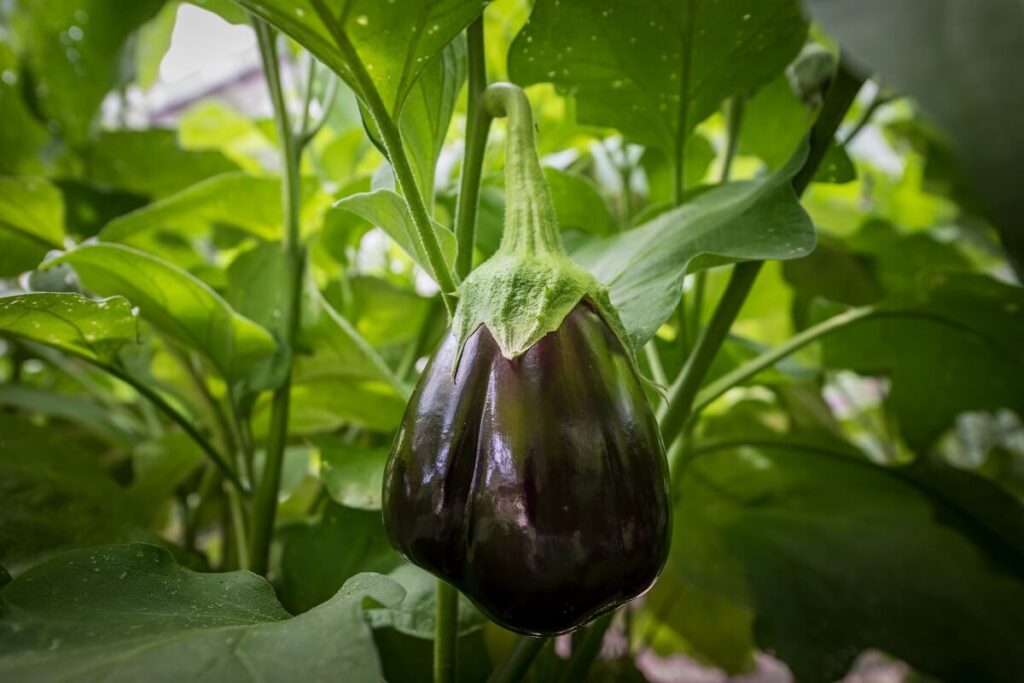
Green eggplant varieties—such as Thai Green, Long Green, and Green Round—offer a unique flavor profile and beautiful color that stands out in any garden. They thrive in tropical and subtropical climates but can adapt exceptionally well to warm temperate regions.
Growing from seed has major advantages:
Cost-Effective
One packet of seeds can produce 20–50 plants—far cheaper than buying nursery seedlings.
Better Quality Control
You control soil, fertilizer, light exposure, and disease prevention from day one.
Stronger, Disease-Resistant Plants
Seed-grown plants often adapt better to local conditions and become more resilient.

Access to Unique Varieties
Some rare green eggplant types are only available as seeds.
STEP 1: Choosing the Right Green Eggplant Seeds
Selecting healthy, high-quality seeds determines half your success.
Choose seeds from reputable brands
Organic, untreated seeds ensure stronger germination.
Check the expiry date
Eggplant seeds remain viable for 2–3 years but have the best germination when fresh.
Select the variety based on your needs
- Long Green Eggplant – fast growing, high yielding
- Thai Green Eggplant – small, round fruits, perfect for curries
- Green Brinjal – versatile, ideal for roasting and frying
STEP 2: Prepare the Perfect Soil Mix
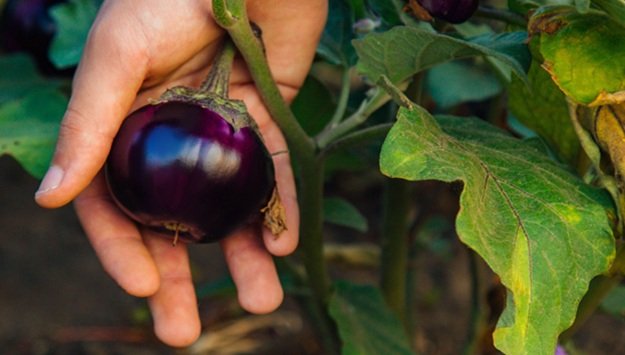
Eggplant seeds need loose, airy, and well-draining soil to sprout strong roots.
The Ideal Seed-Starting Mix
You can create a professional-quality mix at home:
- 40% coco peat
- 30% vermicompost or compost
- 20% perlite or sand
- 10% garden soil
- A pinch of neem powder to prevent fungal growth
Why this mix works
- Coco peat holds moisture but stays light
- Perlite/sand improves drainage
- Compost adds natural nutrients
- Neem powder protects from damping-off disease
Fill seed trays, cups, or pots with this mix and lightly moisten it. Avoid soaked soil—too much water suffocates seeds.

STEP 3: Sowing the Seeds Correctly
Eggplant seeds are tiny but powerful. Sowing them correctly ensures even germination.
How to sow:
- Make small holes 0.5–1 cm deep.
- Drop 1–2 seeds per cell or cup.
- Cover lightly with soil—not too tight.
- Mist water gently to avoid displacement.
- Cover the tray with a lid or plastic sheet to maintain humidity.
Ideal germination temperature: 25–30°C
Eggplant LOVES warmth. Cooler temperatures slow germination dramatically.
Germination Time: 5–10 days
Once you see sprouts, remove the cover immediately.
STEP 4: Provide Proper Light, Heat & Moisture
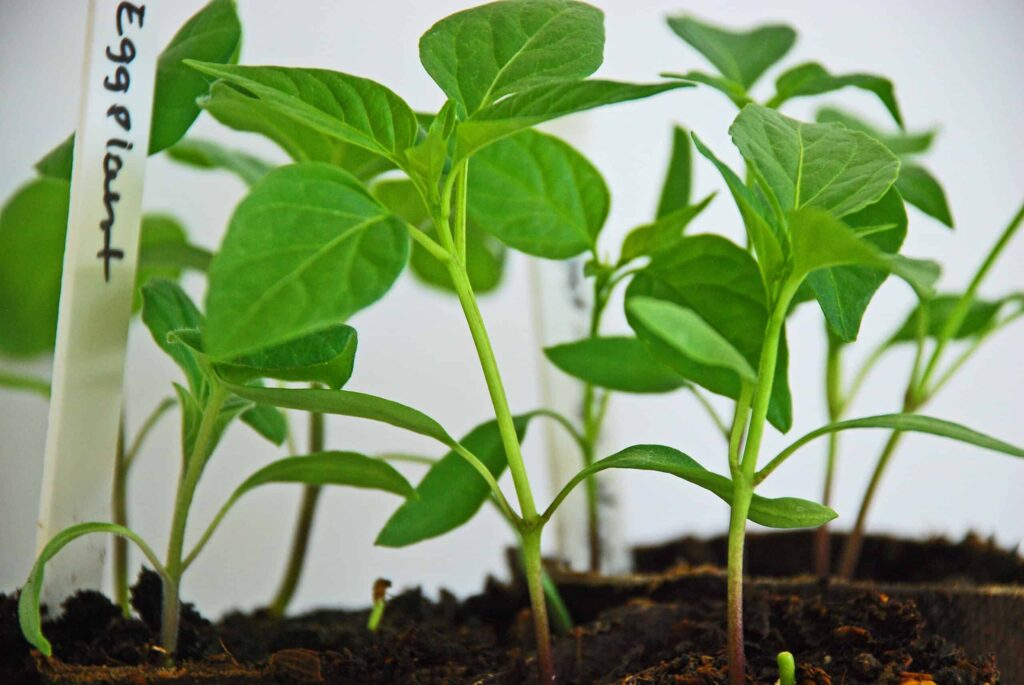
After sprouting, your seedlings need the right environment to grow strong.
Light Requirements
- Seedlings need 4–6 hours of direct sunlight or
- 12–14 hours under grow lights
Without enough light, they become leggy and weak.
Watering
- Keep soil moist but never soggy
- Water from the bottom or mist gently
- Avoid overhead watering to prevent fungus
Temperature
Eggplant seedlings thrive at 22–30°C daytime and 18–22°C at night.
Air Circulation
Place a small fan nearby (on low) to strengthen stems and prevent pests.
STEP 5: Feeding Seedlings for Rapid Growth
At the seedling stage, nutrient balance is crucial.

First Feeding (After 2 True Leaves)
Use a mild fertilizer such as:
- Liquid seaweed (1–2 ml/L)
- Fish emulsion (half strength)
- Balanced NPK 19-19-19 (very diluted)
Feed once every 10–12 days.
This strengthens roots and boosts early growth.
STEP 6: Thinning and Transferring Seedlings
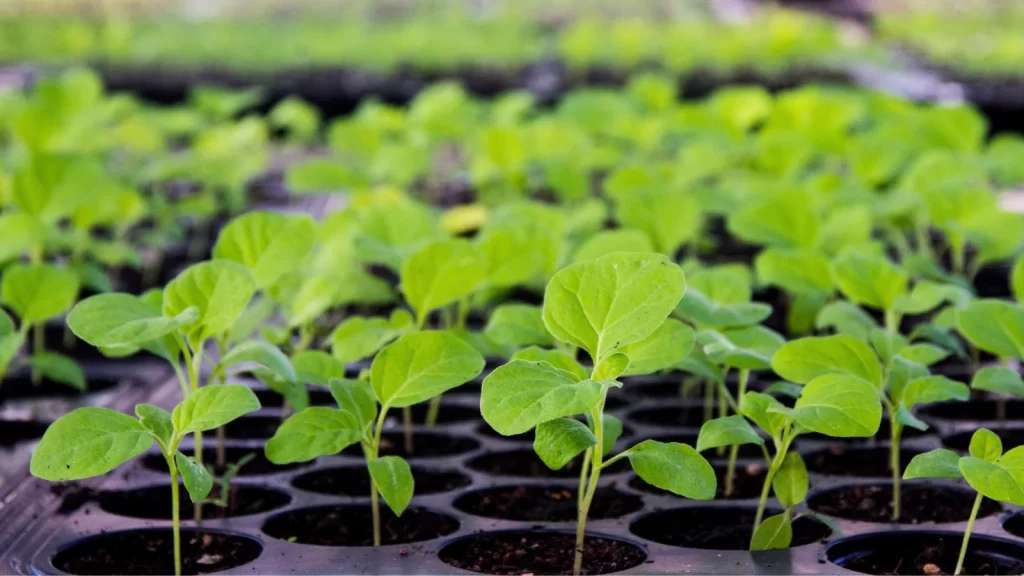
If two seeds germinate in one cell, remove the weak one. Do NOT pull it—cut it at the base with scissors to avoid damaging roots.
Once seedlings reach:
8–10 cm in height
4–6 true leaves
Strong root system
…they are ready for potting up into bigger cups or nursery bags.
Transplant gently with the soil plug intact.

STEP 7: Hardening Off Before Final Transplant
One of the most important—but often ignored—steps in seedling success.
How to Harden Seedlings:
For 7 days:
- Day 1–2: 1 hour morning sun
- Day 3–4: 2–3 hours
- Day 5–7: 4–5 hours + gentle wind
This prepares seedlings for real outdoor conditions.
STEP 8: Final Transplanting Into Containers or Beds
Now your green eggplant seedlings are ready for their permanent home!
Container Size
- Minimum: 12–14 inch pot
- Best: 15–18 inch for maximum yield
Soil Mix for Final Pot
- 40% garden soil
- 30% compost
- 20% coco peat
- 10% sand/perlite
- 2 tbsp neem cake
- 1 handful bone meal or rock phosphate
Transplanting Tips:
- Plant seedlings at the same depth they were growing
- Press soil gently around roots
- Water thoroughly
- Keep in partial shade for 2 days
After that, move to full sunlight.
Bonus Tips for Healthier Green Eggplant Plants
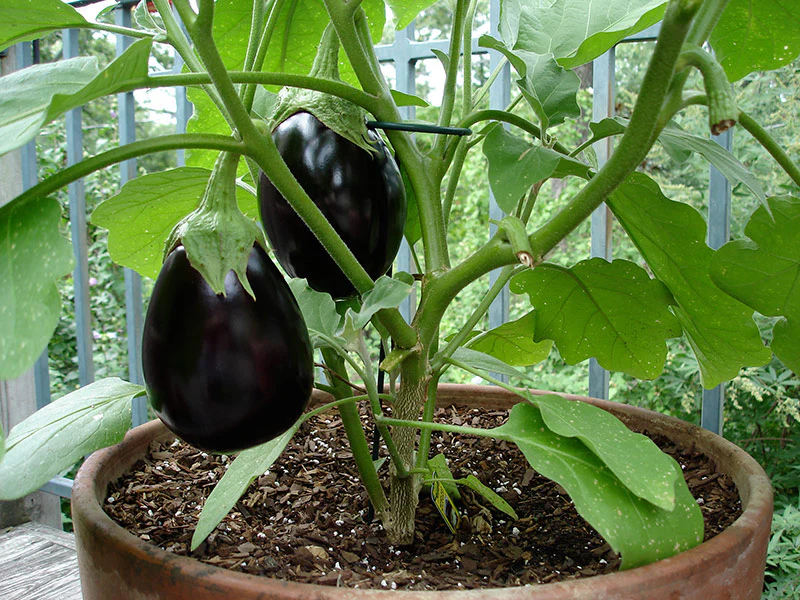
1. Mulching Matters
Mulch with dry leaves or coco husk to retain moisture and prevent weeds.
2. Pest Prevention
Use neem oil spray every 10–12 days to prevent aphids, beetles, and mites.

3. Support Early
Add a small stake to prevent the plant from bending during heavy fruiting.
4. Avoid Overwatering
Eggplants love moisture but hate soggy soil. Let the top layer dry before watering.
5. Prune Wisely
Remove yellow leaves and bottom suckers to improve airflow.
Conclusion: Your Green Eggplant Journey Starts Here
Growing green eggplant from seed to transplant is a simple yet deeply rewarding process. With the right soil mix, consistent moisture, warmth, and careful transplanting, you can produce strong, healthy seedlings that grow into prolific, fruit-bearing plants.
Whether you’re gardening on a balcony, terrace, or backyard, this guide equips you with everything you need to cultivate thriving green eggplants—right from those tiny seeds to vigorous transplants ready to burst into growth.