Growing vegetables in limited space can feel challenging—especially when you want different plants but don’t have enough containers. But what if you could grow two high-yield crops in just one pot? That’s exactly what happened when I experimented with planting corn and long beans together in a single container. The results were nothing short of amazing, and this smart technique has now become one of my favorite space-saving gardening hacks.
In this detailed guide, I’ll walk you through exactly how to grow corn and long beans together successfully, why they make the perfect pair, and how you can achieve strong, healthy plants even on a small balcony or rooftop.
Why Corn and Long Beans Are a Perfect Match
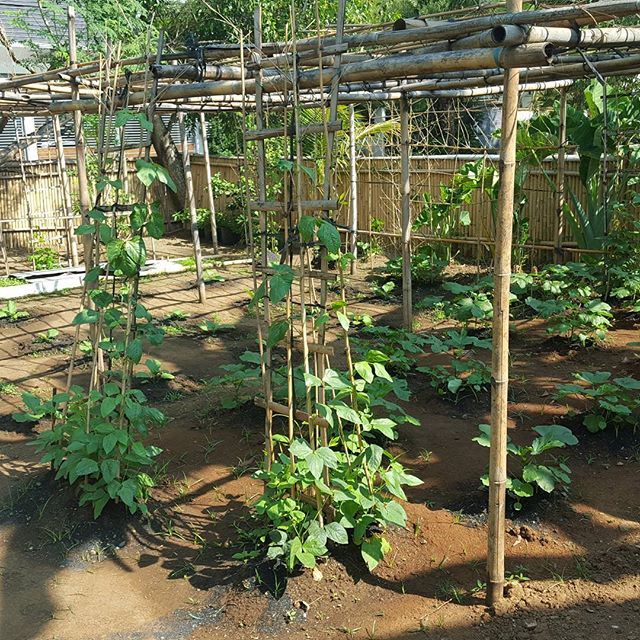
Corn and long beans form what’s known as a “natural companion planting pair.” In gardening traditions like the Native American “Three Sisters method,” tall crops like corn serve as a living trellis, while beans contribute nitrogen to the soil, improving growth for both plants.
Here’s why they work so well together:
1. Corn Acts as a Support
Corn grows tall and strong, providing a natural pole for climbing long beans.
No need for extra bamboo or trellises—nature builds the support for you.
2. Long Beans Feed the Soil
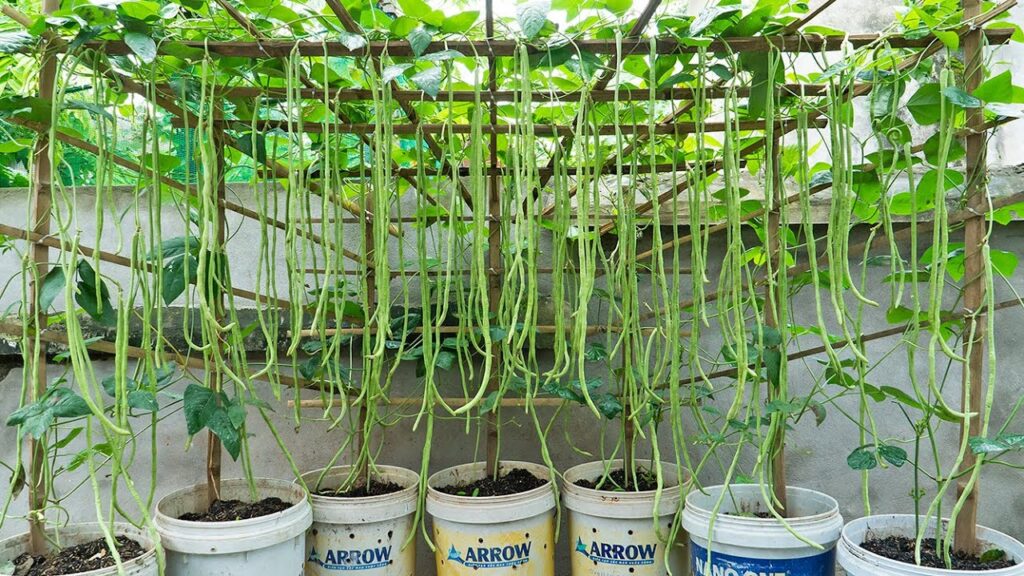
Long beans are legumes, meaning they fix nitrogen around their roots.
Corn is a heavy feeder, so this natural nitrogen boost helps it grow greener and taller.
3. Perfect Use of Vertical Space
Corn grows upward; beans climb upward.
You’re maximizing the vertical area while using only one container.
4. Better Soil Health
The root systems of these crops don’t compete aggressively, reducing stress and increasing yield.
Ideal Container Size & Setup
To grow both crops together, container selection is crucial.
✔ Recommended Container
- Size: Minimum 60 liters or 18–20 inches diameter
- Depth: At least 16–18 inches
- Material: Grow bags, plastic tubs, or barrels cut in half
- Drainage: Multiple holes at the bottom + a layer of pebbles
✔ Soil Mix Recipe (High Yield Formula)
Use a loose, nutrient-rich medium:
- 40% garden soil
- 30% compost (vermicompost preferred)
- 20% cocopeat
- 10% sand or perlite
- Add: 1 cup neem cake, 1 cup bone meal, a handful of ash
Mix well and fill your container, leaving 2–3 inches at the top.
Planting Method: Step-by-Step Guide
Follow this simple system for a perfect start.
Step 1: Plant the Corn First
- Make 3–4 holes in the center area
- Plant 1 corn seed per hole
- Spacing between seeds: 8–10 cm
- Cover lightly and water
Why plant first?
Corn needs time to establish its stem before long beans start climbing.
Step 2: After 10 Days, Add the Long Beans
- Plant long bean seeds along the edges of the container
- Spacing: 10–12 cm apart
- Plant 6–8 seeds around the border
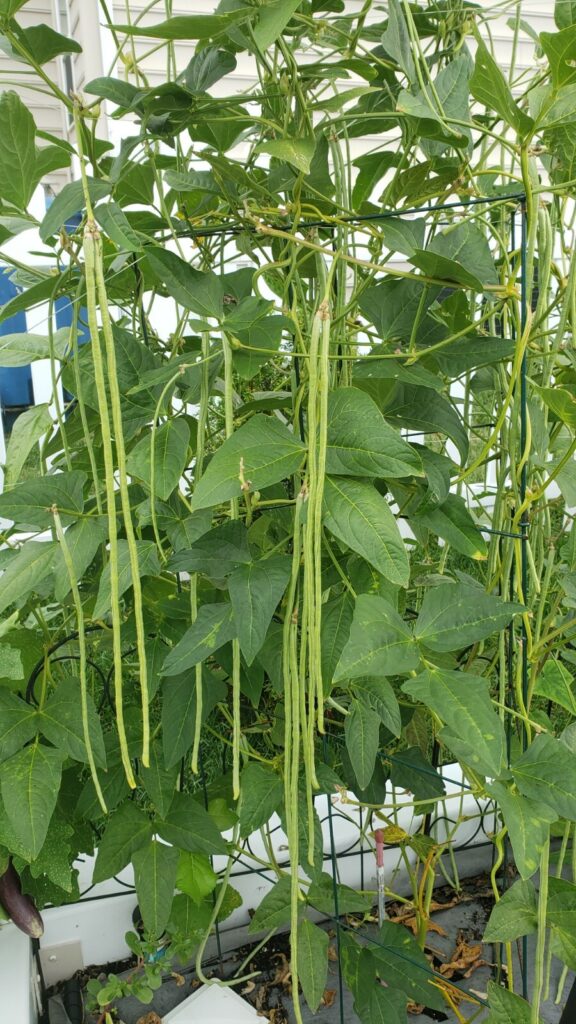
As the beans grow, they start naturally wrapping around the corn stalks.
Watering Schedule
Corn and beans have different water needs, but here’s a balanced system:
- Water daily in summer
- Water every 2–3 days in winter
- Ensure the soil stays moist but not soggy
- Avoid overhead watering when corn develops tassels
Mulching with straw or dry leaves helps retain moisture and prevent weeds.
Sunlight Requirements
Both plants love heat and long hours of light.
- Provide 6–8 hours of direct sunlight daily
- Rooftops and balconies with open exposure are perfect
- Avoid shady areas—corn will grow tall but thin (etiolated)
Fertilizer Schedule for Bigger Harvests
To get maximum yield, follow this feeding routine:
At Planting Time
- Mix compost, bone meal, and neem cake into the soil
After 20 Days
- Add liquid compost tea or seaweed extract
After 35–40 Days
- Add NPK 5-10-10 or organic bloom booster
During Flowering
- Spray banana peel fertilizer or Epsom salt (1 tsp per liter) for bigger pods and healthier leaves.
Pest & Disease Management
Growing two crops together reduces pests, but here’s what to watch for:
Common Issues
- Aphids on bean leaves
- Corn borer larvae
- Fungal spots during rainy weather
Organic Solutions
- Neem oil spray (weekly)
- Garlic-chilies bio-pesticide
- Trichoderma for soil fungus
- Sticky yellow traps for sap-sucking insects
Growth Timeline: What to Expect
Corn
- Sprouts in: 4–6 days
- Fast growth: 2–4 weeks
- Tassels appear: 45–55 days
- Ready to harvest: 70–85 days
Long Beans
- Sprouts in: 3–5 days
- Climbing starts: 2 weeks
- Flowers: 30–35 days
- Pods ready: 45–60 days
Both crops complement each other, resulting in a long harvesting season and better overall growth.
Observations From My Own Experiment
When I tried growing corn and long beans in a single pot, here’s what I noticed:
1. Corn Grew Taller Than Usual
Nitrogen from the bean roots created darker, stronger stems.
2. Beans Climbed Naturally
No trellis needed—the corn acted as excellent support.
3. Zero Soil Wastage
Both crops used the container space efficiently.
4. Maximum Yield in Minimum Space
I harvested:
- 5–6 sweet corn cobs
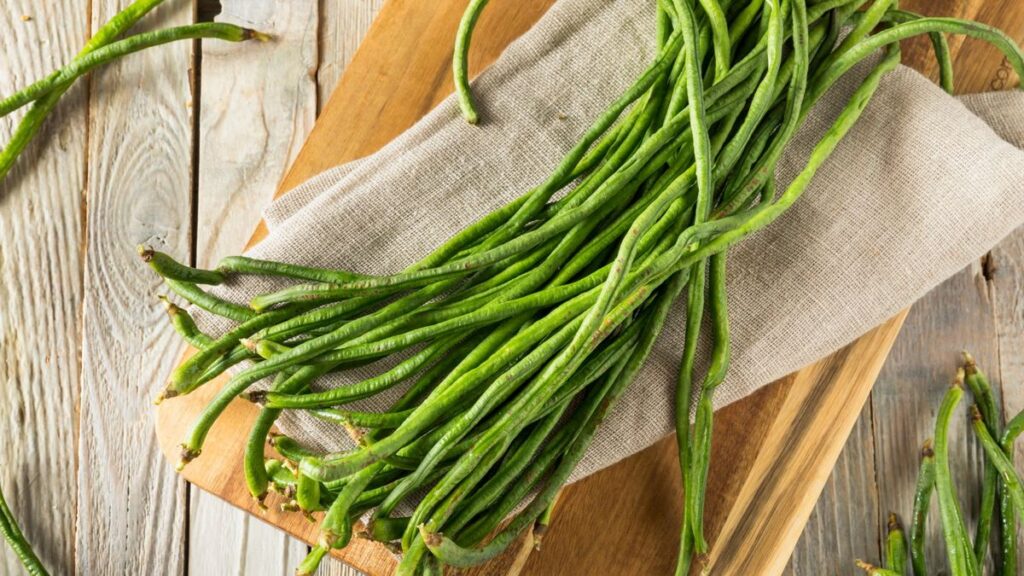
- 40–60 long bean pods per container
This combination turned out to be far more productive than growing each plant separately.
Tips for Even Better Results
- Soak bean seeds for 6–8 hours before planting
- Use hybrid or early-maturity corn varieties for containers
- Mulch heavily in summer
- Rotate your crops after each season
- Support the corn if winds are strong
- Don’t overcrowd the container—balance is key
Conclusion: A Smart Idea for Urban Gardeners
Growing corn and long beans in a single container is not only possible—it’s productive, efficient, and incredibly satisfying. This method saves space, improves soil health naturally, and gives you a double harvest from a small area. Whether you garden on a rooftop, balcony, or tiny backyard, this intercropping technique is worth trying.