Tomatoes are one of the most popular vegetables (technically fruits) grown in home gardens, celebrated for their flavor, versatility, and nutritional value. But what if you don’t have a yard or a garden bed? Thanks to vertical bottle gardening, it’s possible to grow high-yield tomatoes in small spaces, such as balconies, patios, or even windowsills. This innovative method uses recycled plastic bottles to create self-contained vertical gardens, providing your tomato plants with optimal growth conditions and maximum harvest in a compact area.
In this guide, we’ll take you through everything you need to know about growing high-yield tomatoes in vertical bottle gardens—from bottle preparation and planting to maintenance, watering, fertilization, and harvesting.
1. Why Vertical Bottle Gardening Works for Tomatoes
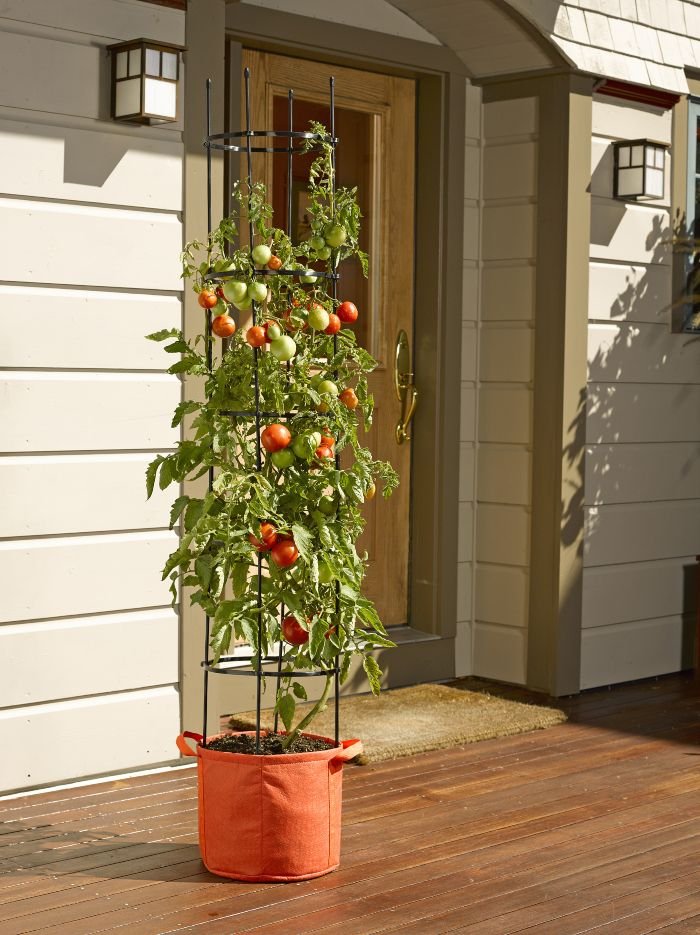
Vertical bottle gardening is an excellent solution for urban growers because:
- Space-saving: Stacks of bottles maximize vertical space instead of horizontal garden beds.
- Water-efficient: Self-watering bottle systems reduce the need for frequent irrigation.
- Eco-friendly: Recycles plastic bottles that would otherwise go to waste.
- High yield: Controlled soil and nutrient conditions improve growth and fruit production.
- Pest control: Elevating plants can reduce soil-borne diseases and pests.
This method is particularly beneficial for tomato varieties that require support and grow tall, as vertical stacking allows vines to grow upwards naturally.
2. Choosing the Right Tomato Variety
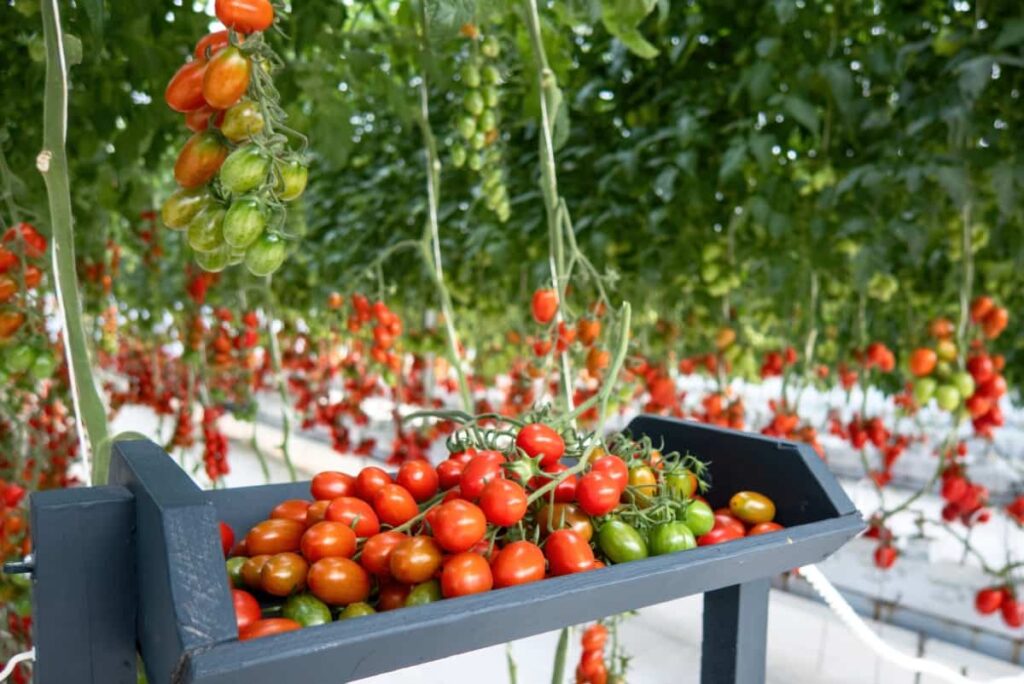
Not all tomato varieties are suitable for vertical bottle gardening. Select varieties that thrive in container growth:
- Cherry Tomatoes: Small, prolific, ideal for vertical growth.
- Roma Tomatoes: Compact, fruit-rich, suitable for container planting.
- Bush Tomatoes (Determinate Varieties): Stay compact and manageable.
- Heirloom Varieties: Can also grow in bottles if trellised carefully.
Tip: Choose disease-resistant varieties and consider the space limitations when planning your vertical setup.
3. Preparing Plastic Bottles for Vertical Tomato Gardens
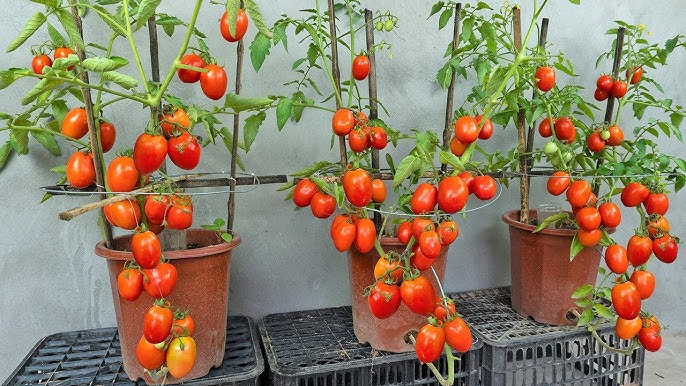
Plastic bottles are the backbone of vertical bottle gardening. Here’s how to prepare them:
Materials Needed
- 2–3 liter plastic bottles (transparent or green)
- Sharp scissors or craft knife
- Cotton wicks or rope for self-watering
- Potting soil, compost, and perlite mix
- Pebbles or small stones for drainage
Step-by-Step Bottle Preparation
- Cut the Bottle: Slice horizontally near the top third to create two sections. The bottom section will hold water, and the top section will contain soil.
- Add Drainage Holes: Poke small holes at the bottom of the soil section to allow wicking.
- Install the Wick: Thread a cotton string through the holes into the water reservoir to deliver consistent moisture.
- Add Drainage Layer: Place pebbles or small stones at the bottom to prevent waterlogging.
- Fill With Soil: Use a light, nutrient-rich mix with compost and perlite for aeration.
These bottles can be stacked vertically or hung, allowing multiple plants to grow in minimal space.
4. Planting Tomato Seeds or Seedlings
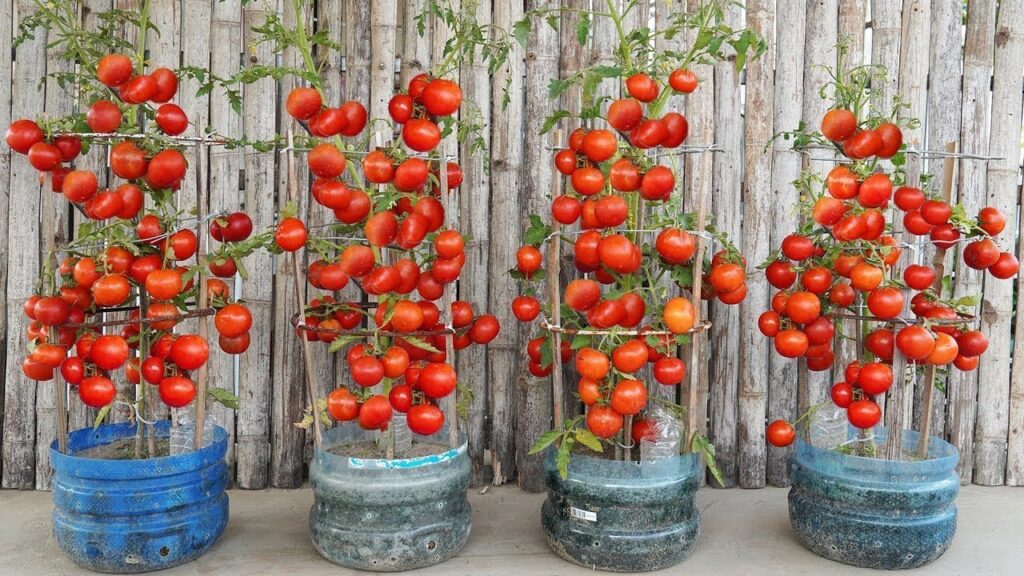
Tomatoes can be grown from seeds or seedlings. Seedlings are recommended for faster results in bottle gardens.
Planting Seeds
- Soak seeds overnight to improve germination.
- Plant 0.5–1 cm deep in moist soil.
- Keep in a warm, bright area for germination (7–10 days).
Planting Seedlings
- Gently transplant a 3–4 week-old seedling into the prepared bottle.
- Dig a small hole and place the seedling so that its roots are fully covered.
- Firm the soil around the stem to support vertical growth.
Tip: Avoid overcrowding; each bottle should host one tomato plant for maximum yield.

5. Positioning Vertical Tomato Gardens
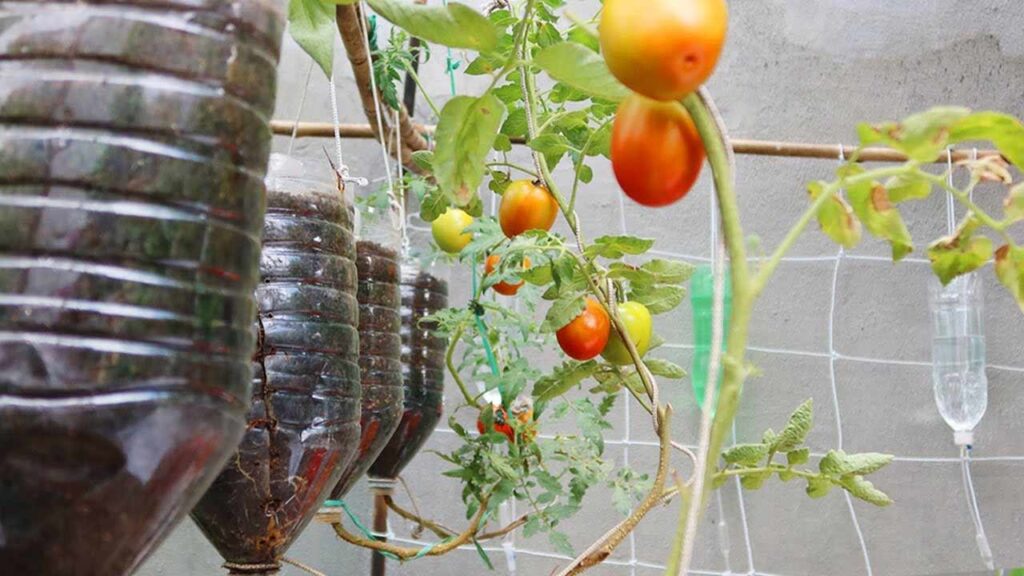
Tomatoes thrive in full sunlight, needing 6–8 hours per day. Place your vertical bottle setup where it receives ample light:
- South-facing balconies or windows for maximum sunlight.
- Rotate bottles occasionally to ensure even light exposure.
- Ensure adequate airflow to reduce fungal infections.
Vertical arrangements help save space while giving each plant sufficient light and ventilation.
6. Watering Tomatoes in Bottles
Watering is critical for healthy growth and fruit production:
- Fill the bottom reservoir of the bottle to provide consistent hydration via the wick.
- Check water levels every 2–3 days, especially in hot climates.
- Keep the soil moist but not waterlogged; excessive water can lead to root rot.
A self-watering bottle system ensures stable soil moisture, crucial for high yields and preventing blossom-end rot.
7. Fertilizing Tomato Plants in Bottle Gardens
Container-grown tomatoes need regular nutrients, as they cannot access garden soil:
Recommended Fertilizers
- Balanced NPK (10:10:10) for vegetative growth
- Phosphorus-rich fertilizer during flowering to support fruit set
- Potassium fertilizer for larger, sweeter fruits
- Organic options: Compost tea, worm castings, or diluted fish emulsion
Fertilizing Tips
- Fertilize every 2–3 weeks in small amounts.
- Over-fertilization leads to lush foliage but fewer fruits.
- Use liquid fertilizers for direct absorption in bottle gardens.
Proper nutrition ensures vibrant plants with abundant fruit.
8. Supporting and Pruning Tomato Plants
Vertical bottle gardening requires adequate support for vines:
- Insert a small stake or bamboo stick inside each bottle to support the plant.
- Train vines along the vertical structure to maximize space.
- Prune side shoots (suckers) to direct energy to fruit production.
- Remove yellowing or diseased leaves to maintain plant health.
These steps ensure higher yields and healthier plants in compact spaces.
9. Pest and Disease Management
Tomatoes are prone to pests and diseases but are manageable in bottle gardens:
- Aphids & Whiteflies: Spray with mild soap solution or neem oil.
- Fungal infections: Ensure proper spacing, airflow, and avoid overwatering.
- Tomato hornworms: Handpick and dispose of them.
Monitoring plants regularly allows for early intervention, reducing crop loss.
10. Harvesting High-Yield Tomatoes
Tomatoes are ready to harvest when fully colored and firm:
- Cherry tomatoes can be picked as soon as they turn red for fresh snacking.
- Larger varieties, like Roma or Beefsteak, should ripen fully on the vine.
- Frequent harvesting encourages the plant to produce more fruits continuously.
- Use scissors or gentle twisting to avoid damaging stems.
Proper harvest timing guarantees sweet, juicy, and abundant tomatoes.
11. Advantages of Vertical Bottle Tomato Gardens
- Urban gardening-friendly: Perfect for apartments and small spaces.
- Water-efficient: Self-watering reduces maintenance.
- Eco-friendly: Repurposes plastic bottles.
- Cost-effective: Minimal investment for continuous harvests.
- High yield: Compact growth with proper pruning and nutrients.
- Easy care: Pests and disease management simplified in controlled setup.
Vertical bottle gardens are ideal for anyone wanting fresh tomatoes year-round, even without a traditional garden.
12. Tips for Maximizing Yield
- Use larger bottles for bigger plants and roots.
- Provide consistent sunlight daily.
- Rotate or move bottles to balance light exposure.
- Apply liquid fertilizer regularly for continuous fruiting.
- Plant successive seedlings every few weeks to enjoy tomatoes year-round.
Following these tips ensures healthy plants and maximum production in your vertical garden.
Final Thoughts
Vertical bottle gardening makes high-yield tomato cultivation accessible to everyone, even those with limited space. By preparing bottles properly, planting the right varieties, providing consistent water and nutrients, and supporting vertical growth, you can enjoy fresh, flavorful tomatoes from your balcony or patio all year round.
This method combines urban gardening, sustainability, and efficiency, turning ordinary plastic bottles into a productive tomato farm. With patience, care, and attention to detail, your vertical bottle garden can become a reliable source of fresh, homegrown tomatoes for your meals and family.