Strawberries are one of the most loved fruits worldwide. Sweet, juicy, and nutrient-packed, they are a favorite in desserts, smoothies, and salads. But what if you could grow many large strawberries at home in simple plastic bottles and enjoy fresh harvests for six months straight?
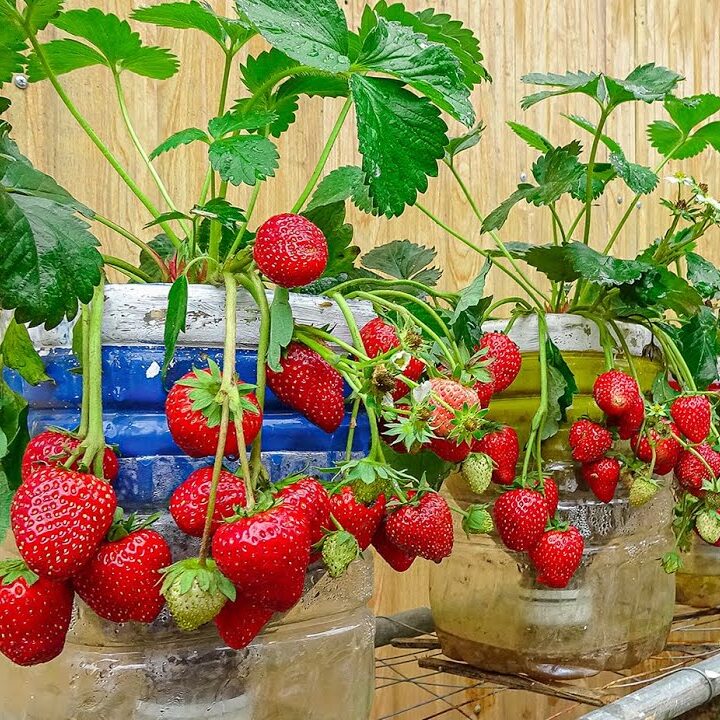
Plastic bottle gardening is a space-saving, eco-friendly, and highly productive way to grow strawberries at home. This method is perfect for balconies, terraces, or small urban gardens, and the results are truly amazing. In this comprehensive 1200-word guide, we’ll explore how to plant, nurture, and harvest strawberries in plastic bottles for months of continuous fresh fruit.
Introduction: Why Grow Strawberries in Plastic Bottles?
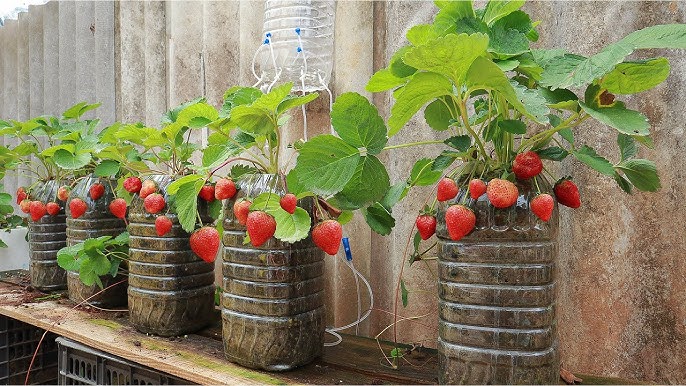
Strawberries thrive in containers because they have shallow roots and need well-drained soil. Using plastic bottles offers multiple benefits:
- Space-saving: Ideal for small apartments or rooftop gardens
- Eco-friendly: Reuses plastic bottles and reduces waste
- Cost-effective: Low-cost gardening solution
- Portable: Easily move bottles to maximize sunlight or protect from weather
- Continuous yield: With proper care, bottles can produce fruits for six months
Plastic bottles allow you to control soil quality, drainage, and watering, making strawberry cultivation easy even for beginners.
Step 1: Selecting the Right Strawberry Variety
Choosing the right variety is crucial for continuous fruit production. There are three main types:
- June-bearing strawberries: Produce one large crop per year. Not ideal for continuous harvest.
- Everbearing strawberries: Produce two main harvests—spring and autumn.
- Day-neutral strawberries: Produce continuously throughout the growing season, perfect for a six-month harvest in bottles.
Recommended varieties for containers:
- Albion (Day-neutral, large and sweet)
- Seascape (High yield, compact growth)
- Quinault (Sweet, disease-resistant)
Select a day-neutral variety for continuous harvesting.
Step 2: Preparing Plastic Bottles for Strawberry Cultivation
Materials Needed:
- 1.5–2 liter plastic bottles
- Sharp knife or scissors
- Drill or nail for drainage holes
- Potting mix (soil + compost + cocopeat)
Preparing the bottles:
- Cut the top third of the bottle to create a planting container. Use the top half as a mini greenhouse for seedlings if desired.
- Drill 4–6 drainage holes at the bottom to avoid waterlogging.
- Optional: Paint the bottles or wrap them in black paper to protect roots from direct sunlight.
Plastic bottles are lightweight and easy to move, perfect for small spaces or balconies.
Step 3: Soil Preparation
Strawberries need well-draining, nutrient-rich soil. Use a mix like this:
- 40% garden soil
- 30% compost or vermicompost
- 20% cocopeat or coco coir
- 10% sand or perlite for aeration
Tip: Add a teaspoon of bone meal or slow-release fertilizer to boost flowering and fruiting.

Step 4: Planting Strawberry Seedlings or Runners
You can start strawberries from seedlings, tissue culture plants, or runners. Runners are easiest for beginners and produce faster yields.
Planting Steps:
- Fill the bottle with prepared soil, leaving 1–2 inches from the top.
- Plant one strawberry seedling or runner per bottle.
- Ensure roots are fully covered but the crown (where leaves emerge) is above soil.
- Water gently to settle the soil.
Tip: One plant per bottle ensures each strawberry gets sufficient nutrients.
Step 5: Light and Temperature Requirements
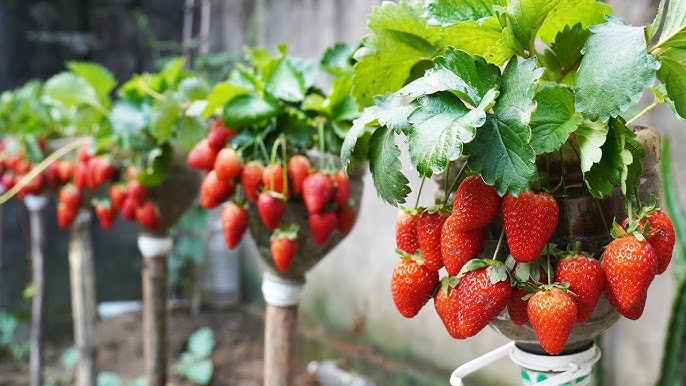
Strawberries need plenty of sunlight for large, juicy fruits:
- Sunlight: 6–8 hours per day
- Temperature: 18–25°C ideal for growth and fruiting
- Avoid frost, as cold can damage the plant and flowers
Indoor gardeners: Use LED grow lights if natural sunlight is insufficient.
Step 6: Watering Strawberries in Bottles
Strawberries require consistent moisture, especially during flowering and fruiting, but overwatering leads to root rot.
Watering Tips:
- Water when the top 1 inch of soil is dry
- Deep watering encourages healthy roots
- Reduce watering slightly during fruit ripening to enhance sweetness
- Mulch with straw or dry leaves to retain moisture and prevent soil from drying out
Step 7: Fertilization and Nutrient Management
Container-grown strawberries need regular feeding to produce multiple harvests.
Recommended Fertilization:
- At planting: Mix compost or vermicompost into soil
- Every 2–3 weeks: Apply a balanced liquid fertilizer (NPK 10:10:10) or organic alternatives like fish emulsion
- During flowering and fruiting: Increase potassium and phosphorus for larger fruits
Pro tip: Avoid excessive nitrogen—it leads to more leaves but fewer strawberries.
Step 8: Pest and Disease Management
Even in bottles, strawberries can attract pests:
Common pests:
- Aphids
- Spider mites
- Whiteflies
- Slugs or snails
Natural control methods:
- Neem oil spray every 7–10 days
- Garlic-chili spray for aphids
- Remove damaged or yellow leaves immediately
Disease prevention: Avoid waterlogging, rotate bottles if possible, and maintain good airflow around plants.
Step 9: Flowering and Pollination
Flowering is crucial for fruit production. Day-neutral strawberries produce flowers continuously.
- Flowers appear near leaf axils
- Hand pollination with a soft brush can increase fruit set, especially indoors
- Keep plants healthy and nutrient-fed for continuous flowering
Step 10: Harvesting Strawberries
When to harvest:
- Pick berries when fully red, firm, and glossy
- Do not leave overripe fruit on the plant—it reduces continuous production
How to harvest:
- Use fingers or scissors to cut berries carefully
- Harvest every 2–3 days for maximum yield
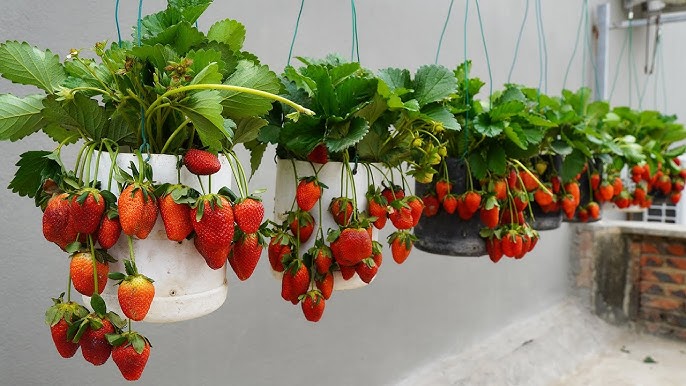
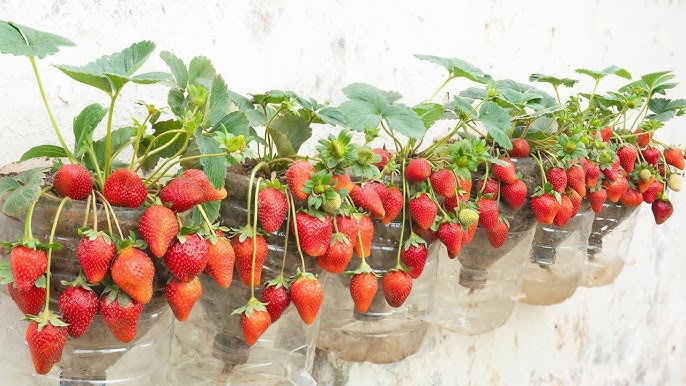
One bottle can yield 10–15 large strawberries per harvest, and with day-neutral varieties, you can harvest for six months straight.
Step 11: Continuous Care for Six-Month Production
To maintain continuous strawberry production:
- Remove old leaves and runners that don’t contribute to fruiting
- Keep soil nutrient-rich and well-watered
- Protect plants from extreme weather or pests
- Replenish organic fertilizers every month
With consistent care, a few bottles can provide a steady supply of large strawberries all season long.
Benefits of Growing Strawberries in Plastic Bottles
- Space-efficient: Ideal for apartments and balconies
- Eco-friendly: Reduces plastic waste
- Easy to manage: Lightweight, portable, and convenient
- Continuous harvest: Enjoy strawberries for six months
- Organic and healthy: No harmful pesticides
- Fun and educational: Perfect for kids and gardening enthusiasts
Conclusion: Plastic Bottle Strawberries—Big Fruits, Small Space
Growing strawberries in plastic bottles is a simple, eco-friendly, and highly rewarding way to enjoy fresh fruits at home. With the right variety, soil, watering, and care, you can pick many large strawberries for six months straight without needing a large garden.
This method not only produces delicious, juicy strawberries but also reuses plastic bottles, saves money, and adds greenery to your living space. Start today and transform empty bottles into fruit-bearing wonders—delighting your taste buds and your eyes with each harvest.