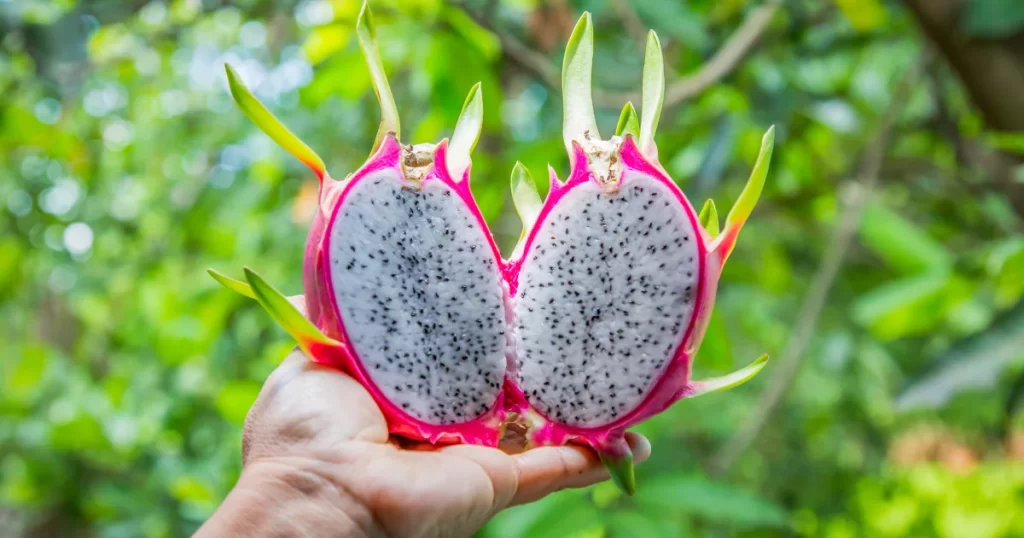
Dragon fruit — with its striking colors, exotic appearance, and refreshing sweetness — is one of the most rewarding fruits you can grow at home. Many people believe that dragon fruit requires large farmland or tropical conditions, but the truth is surprising: you can grow healthy, fruit-bearing dragon fruit plants right in containers, even in small balconies or terraces.
This easy step-by-step guide will walk you through the entire journey, from selecting the stem cutting to harvesting your first dragon fruits. Whether you’re a beginner or an experienced gardener, this method guarantees strong growth, early fruiting, and minimal maintenance.
Let’s get started with the ultimate container-growing method for dragon fruit!
Why Grow Dragon Fruit in Containers?
Container growing has several advantages:
✔ Perfect for Small Spaces
Even with just 1–2 pots, you can enjoy multiple harvests every year.
✔ Better Growth Control
You can adjust soil, watering, and sunlight easily, ensuring ideal conditions.
✔ Faster Fruiting
Container-grown plants often mature faster because the environment is controlled.
✔ Less Disease Risk
Raised containers reduce soil-borne pests and fungal infections.
✔ Easier to Manage
Training, pruning, and harvesting are much simpler when the plant is contained.
Step 1: Choose the Right Stem Cutting
The first step is selecting a healthy dragon fruit stem (also called a “segment” or “pad”).
Qualities of a Good Cutting
- 12–18 inches long
- Thick, green, and wrinkle-free
- No signs of rot or fungus
- At least 2–3 nodes visible
If you’re cutting from an existing plant, use sterilized shears and cut at a 45° angle. Let the cut end dry for 3–5 days until it forms a callus — this prevents rotting when planted.
Step 2: Select the Best Container
Dragon fruit is a climbing cactus, so it needs:
✔ A deep pot
At least 20–25 liters or a drum-style container.
✔ Good drainage
Multiple holes at the bottom prevent root rot.
✔ Space for support
You’ll need to install a post or trellis, so choose a container wide enough.
Plastic, cement, clay, or grow bags all work well. Ensure stability because the plant becomes heavy.
Step 3: Prepare the Ideal Soil Mix
Dragon fruit loves light, airy, well-draining soil. Heavy clay soils will suffocate the roots.
Best Soil Formula:
- 40% garden soil
- 30% compost or cow dung
- 20% sand
- 10% cocopeat
Add crushed eggshells or bone meal for extra calcium, which improves fruit size and plant strength.

Mix well before filling your container.
Step 4: Plant the Cutting Correctly
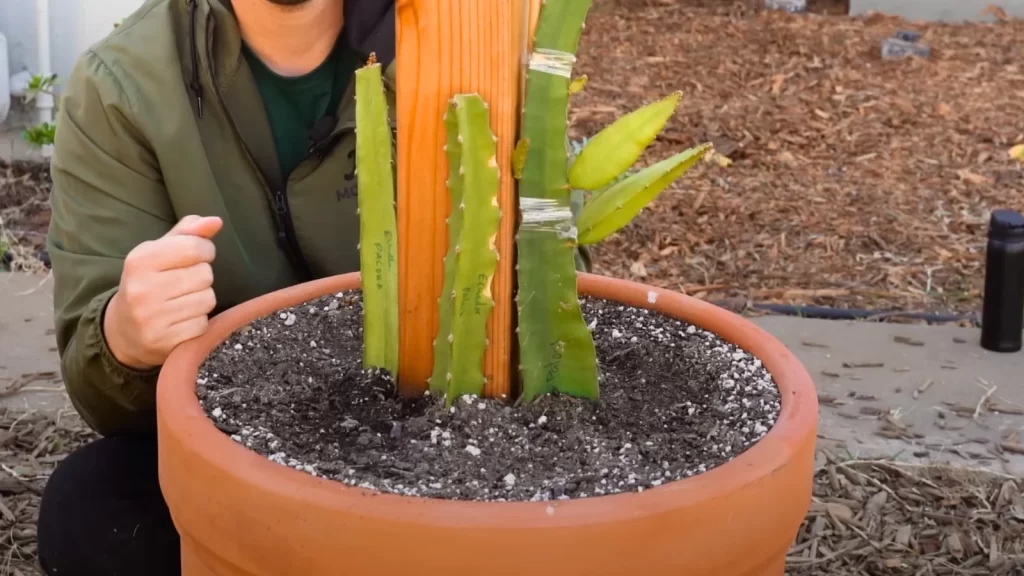
Once the cutting has dried and callused:
- Insert 2–3 inches of the cutting into the soil.
- Make sure the cutting is upright, not leaning.
- Compact the soil gently so it supports the cutting.
- Water lightly — just enough to settle the soil.
Do not overwater at this stage; the cutting still needs to establish roots.
Step 5: Install a Strong Support System
Dragon fruit is a vining cactus that grows vertically first, then branches outward.
Best Support Options:
- Wooden post
- Cement pole
- Bamboo stick
- Metal pipe
- Trellis or circular frame
Tie the stem lightly with soft cloth or twine to prevent damage.
As the plant grows, train it upward until it reaches the top of the support, then allow it to branch outward.
Step 6: Watering the Right Way
Dragon fruit is a cactus, so it needs less water than most fruit plants.
Watering Rules
- Newly planted cutting: Water every 4–5 days.
- Established plant: Water once a week.
- Hot summer: Water twice a week.
- Winter: Water very sparingly.
The soil should stay slightly moist, never soggy.
Step 7: Provide Maximum Sunlight
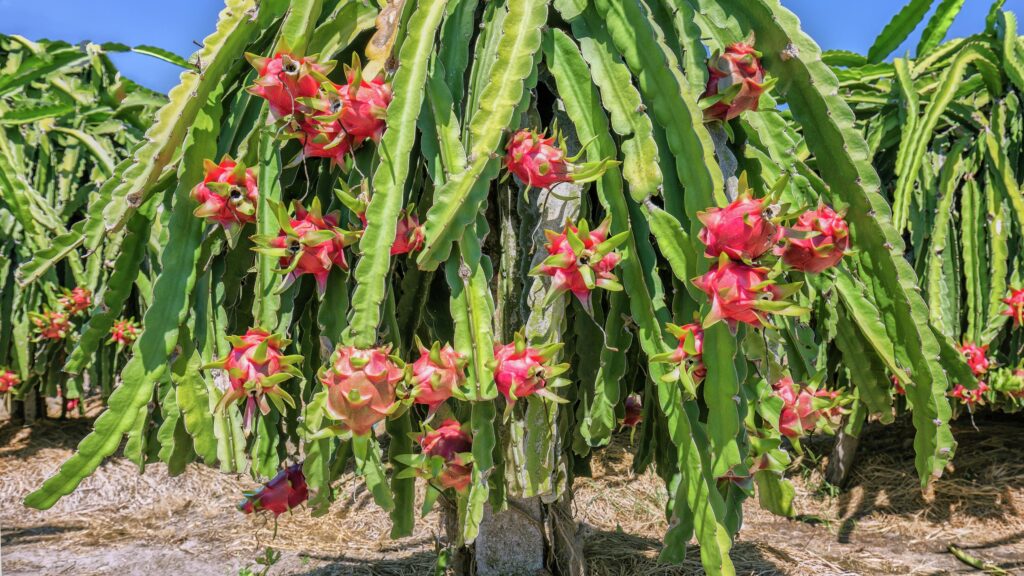
Dragon fruit thrives in bright, direct sunlight.
Sunlight Requirement:
6–8 hours of full sunlight daily
Place containers on rooftops, balconies, or near south-facing windows for best growth.
Lack of sunlight results in:
- Slow growth
- Weak stems
- Poor flowering
- Late fruiting
Step 8: Fertilize for Faster Growth and More Fruits
Dragon fruit needs regular feeding for continuous growth and flowering.
Best Fertilizers:
- Vermicompost
- Cow dung
- Seaweed extract
- Mustard cake water (diluted)
- Banana peel fertilizer
- Bone meal
Feeding Schedule:
- Apply organic compost every 30 days.
- Spray liquid fertilizer every 15 days.
During flowering season (summer), increase potassium-based fertilizers for better fruit development.
Step 9: Pruning for Stronger Growth
Pruning helps channel energy into productive branches.
When to Prune:
- After the main stem reaches the top of the pole
- After fruiting
- When stems become too long or tangled
- When branches show signs of rot or pest damage
Cut weak, thin, or overcrowded stems.
Keep only 3–5 strong branches for maximum flowering.
Step 10: Flowering and Pollination
Dragon fruit produces large, fragrant, night-blooming flowers.
Flowering Season:
- Usually summer to early monsoon
Pollination Tips:
Some varieties are self-pollinating, while others need cross-pollination.
To improve fruit set:
- Hand pollinate using a soft brush
- Transfer pollen from anthers to stigma
- Best done at night (flowers open after sunset)
Hand pollination increases fruit size and ensures consistent harvests.
Step 11: Fruit Development and Care
After pollination, fruits begin forming within days.
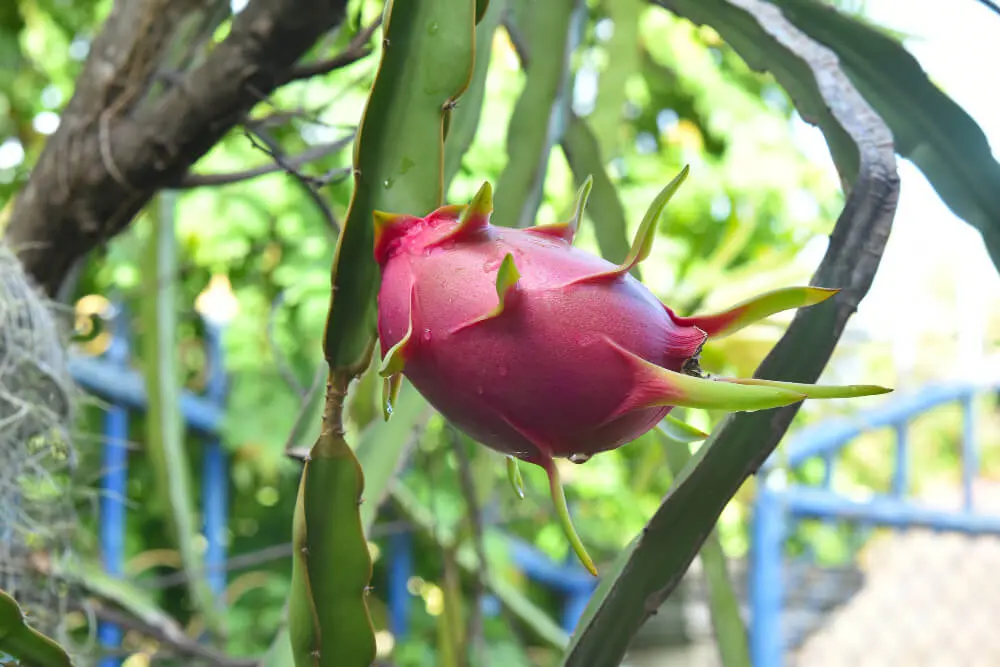
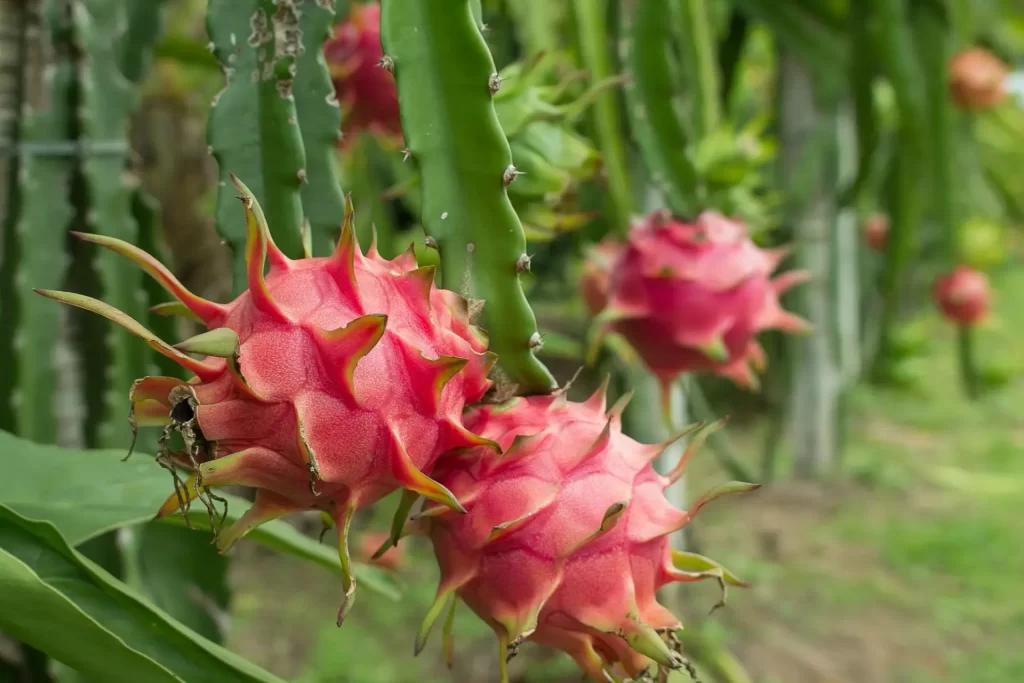
What to Expect:
- Fruit grows for 30–50 days
- Skin turns bright red, yellow, or pink depending on variety
- Flesh becomes sweet and juicy
During this stage:
- Water slightly more
- Provide support to heavy branches
- Add a potassium-rich fertilizer
Step 12: Harvesting Your Dragon Fruits
The best part of the journey — harvesting!
Signs the Fruit Is Ready:
- Skin turns vibrant and shiny
- Fruit slightly softens on pressing
- Wings on the fruit edges turn brown
- Fruit slips off gently when twisted
Harvest with a sharp knife.
Avoid over-ripening on the plant — flavor decreases if left too long.
Extra Tips for Success
✔ Protect From Frost
Bring containers indoors during very cold weather.
✔ Prevent Rot
Avoid watering the plant at night or during heavy rains.
✔ Keep Soil Loose
Once every few months, gently aerate the top layer of soil.
✔ Watch for Pests
Use neem oil spray every 15 days to repel insects.
Conclusion: Growing Dragon Fruit in Containers Is Easier Than You Think
With the right cutting, soil, container, and sunlight, you can grow healthy, fruit-bearing dragon fruit plants right at home. Container gardening gives you total control — and watching the plant climb, flower, and finally produce exotic fruits is incredibly rewarding.
Even if you’re new to gardening, this method is simple, reliable, and highly successful. Start with one pot today, and soon you’ll have your own supply of fresh, sweet dragon fruits — all grown on your balcony!