When you think of hanging baskets, you might picture cascading petunias or lush ivy spilling over the edges. But flowers aren’t the only option—vegetables can be just as stunning, not to mention useful. Hanging baskets allow you to grow food even in small spaces like balconies, patios, or porches, while adding beauty to your outdoor décor.
The key is choosing vegetables that naturally thrive in confined spaces and benefit from the vertical growing environment. Here are six vegetables that not only do well in hanging baskets but can also provide fresh harvests all season long.
1. Cherry Tomatoes
Cherry tomatoes are one of the most popular choices for hanging baskets because of their compact growth and high yields.
Why They Thrive:
- Naturally cascading vines spill attractively over the basket’s edge.
- Small fruits ripen quickly, often within 55–70 days.
- The plant benefits from the air circulation hanging baskets provide, reducing disease risk.
Best Varieties:
- ‘Tumbling Tom’
- ‘Maskotka’
- ‘Balconi Red’
Care Tips:
- Use a large basket (at least 12–14 inches in diameter) with high-quality potting soil.
- Fertilize weekly with a tomato-specific liquid fertilizer once flowers appear.
- Water consistently—hanging baskets dry out quickly in summer heat.
Pro Tip: Pair cherry tomatoes with trailing herbs like thyme for both beauty and flavor.
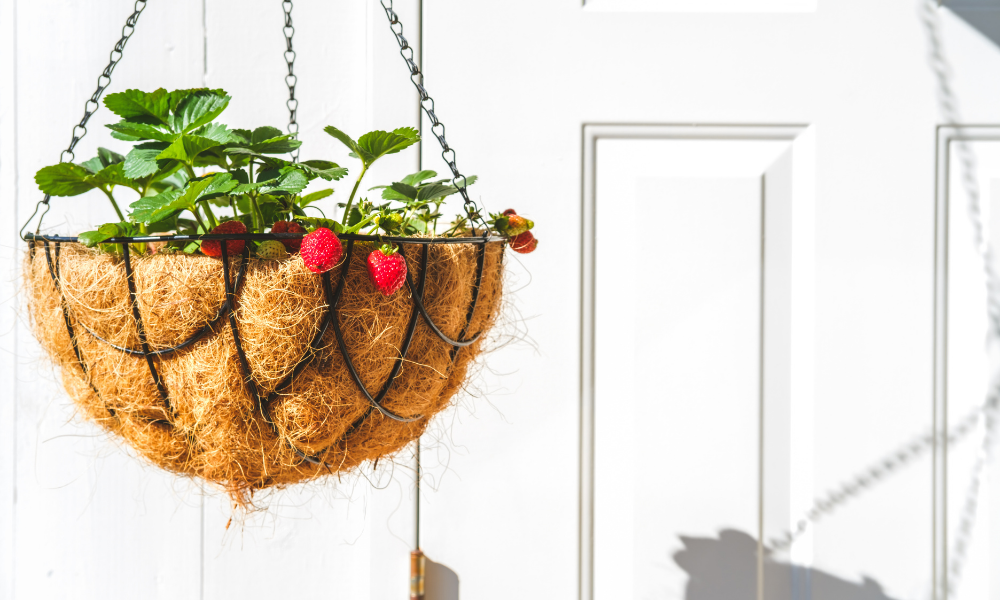
2. Strawberries
Technically a fruit, strawberries are often included in vegetable gardens because of their ease of cultivation and culinary uses. They’re practically made for hanging baskets.
Why They Thrive:
- Trailing runners create a lush, cascading effect.
- Hanging baskets keep fruit elevated, reducing slug and rot problems.
- Compact root systems adapt well to shallow containers.
Best Varieties:
- ‘Temptation’
- ‘Tristan’ (an everbearing pink-flowered variety)
- ‘Albion’
Care Tips:
- Use a strawberry planter basket or a regular basket with 10–12 inches of depth.
- Fertilize every two weeks with a balanced liquid fertilizer.
- Remove runners unless you want to propagate more plants.
Pro Tip: Plant everbearing varieties for a steady supply of berries throughout summer.
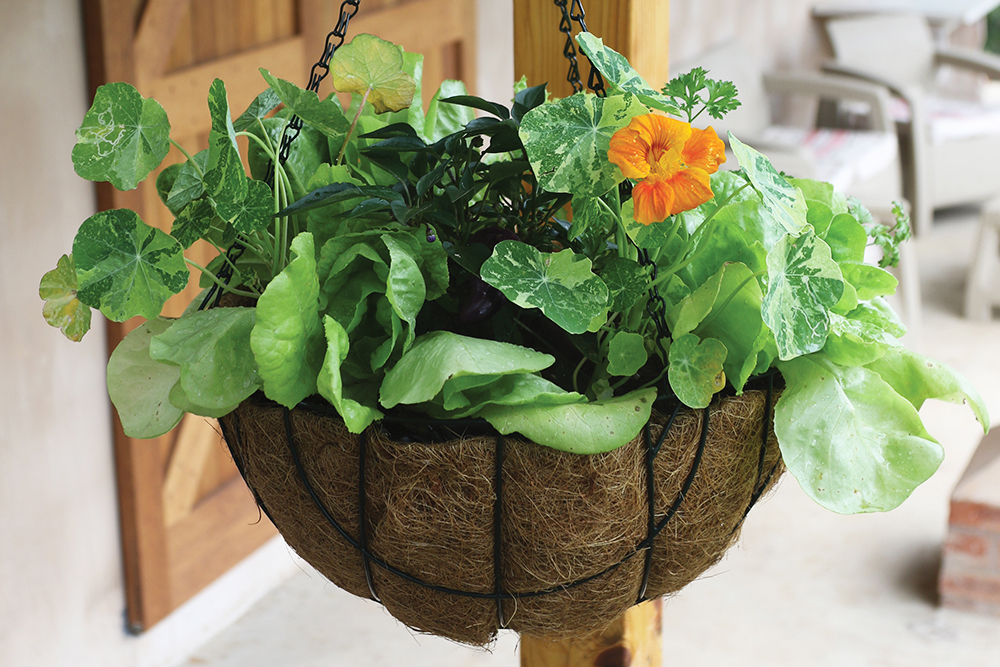
3. Lettuce and Salad Greens
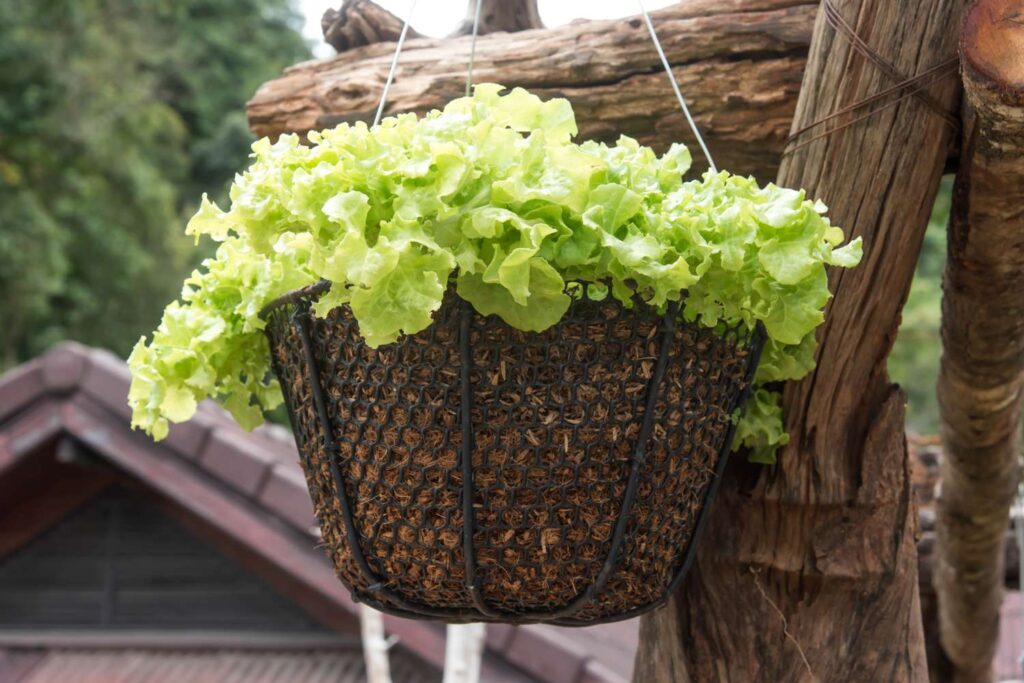
Leafy greens like lettuce, spinach, and arugula grow surprisingly well in hanging baskets, especially in cooler weather.
Why They Thrive:
- Shallow root systems fit perfectly in basket soil.
- Easy to harvest by snipping leaves as needed.
- Cool-season crops that can be moved to shadier spots when summer heat arrives.
Best Varieties:
- Loose-leaf lettuces such as ‘Black-Seeded Simpson’
- Cut-and-come-again mixes
- Baby spinach
Care Tips:
- Use a wide basket to scatter-sow seeds for a lush “green bowl.”
- Water lightly but frequently—greens wilt quickly when dry.
- Place in partial shade during hot months to prevent bolting.
Pro Tip: Mix different lettuce varieties for a colorful and textured basket.
4. Peppers (Chili and Mini Bell)
Compact pepper plants are another excellent option for hanging baskets. Their upright growth combined with colorful fruits makes them ornamental and edible.
Why They Thrive:
- Dwarf varieties stay small while still producing plenty of fruit.
- Baskets provide good air circulation, helping reduce fungal issues.
- Their vibrant red, yellow, and orange fruits add visual appeal.
Best Varieties:
- ‘Basket of Fire’ chili pepper
- Mini bell peppers (‘Sweet Red Baby’ or ‘Orange Mini Bell’)
- Ornamental edible peppers like ‘Apache’
Care Tips:
- Place in full sun (at least 6–8 hours daily).
- Fertilize every two weeks with a tomato or pepper fertilizer.
- Provide support if stems bend under the weight of fruit.
Pro Tip: Choose colorful mini peppers for a basket that doubles as garden décor.
5. Radishes
Fast-growing and versatile, radishes adapt well to baskets as long as they have enough soil depth.
Why They Thrive:
- Small, quick-growing roots mature in as little as 25–35 days.
- Ideal for early spring and fall planting.
- Can be interplanted with slower crops like lettuce.
Best Varieties:
- ‘Cherry Belle’
- ‘French Breakfast’
- ‘Easter Egg Mix’
Care Tips:
- Use a basket at least 8 inches deep for root development.
- Keep soil evenly moist to prevent woody or pithy roots.
- Harvest promptly when mature to keep roots tender.
Pro Tip: Mix radishes with salad greens in the same basket for a ready-made salad garden.
6. Beans (Bush and Dwarf Types)
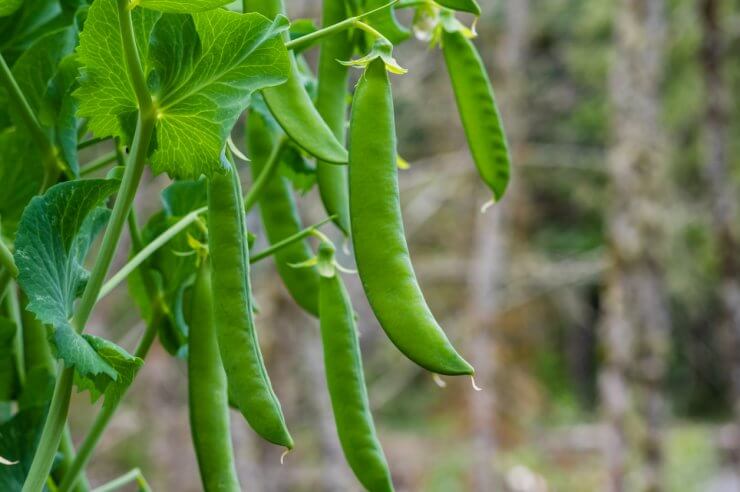
Beans may not be the first vegetable that comes to mind for hanging baskets, but certain varieties thrive when given room to spill and climb.
Why They Thrive:
- Compact bush beans fit neatly into baskets.
- Some dwarf climbing beans trail gracefully, creating a cascading effect.
- Beans fix nitrogen, enriching the soil for companion plants.
Best Varieties:
- ‘Mascotte’ (a dwarf French bean bred for containers)
- ‘Hestia’ runner bean (ornamental and edible)
- Dwarf bush beans like ‘Tendergreen’
Care Tips:
- Use a sturdy basket with at least 12 inches of soil depth.
- Water generously, as beans dislike dry soil.
- Harvest pods regularly to encourage continuous production.
Pro Tip: Plant beans near the edge of the basket so their stems can drape elegantly.
Bonus Picks for Hanging Basket Edible Gardens
If you want to expand further, consider adding:
- Herbs like basil, parsley, thyme, or oregano.
- Compact cucumbers bred for containers, such as ‘Bush Pickle.’
- Kale or Swiss chard for colorful, nutrient-rich foliage.
General Care Tips for Hanging Basket Vegetables
Regardless of the crop, hanging baskets require some extra attention compared to ground planting.
- Watering: Baskets dry out faster due to air exposure. Check soil daily, especially in hot weather. Self-watering baskets or drip irrigation can help.
- Soil Mix: Use lightweight potting soil with compost for nutrients and perlite for drainage. Avoid heavy garden soil.
- Fertilization: Because nutrients leach out quickly with frequent watering, fertilize every 1–2 weeks with a liquid organic fertilizer.
- Basket Size: Bigger is better—12 to 16 inches is ideal for vegetables. Smaller baskets limit root space and dry out faster.
- Placement: Choose sunny spots for fruiting crops (tomatoes, peppers, strawberries) and partial shade for leafy greens.
Final Thoughts
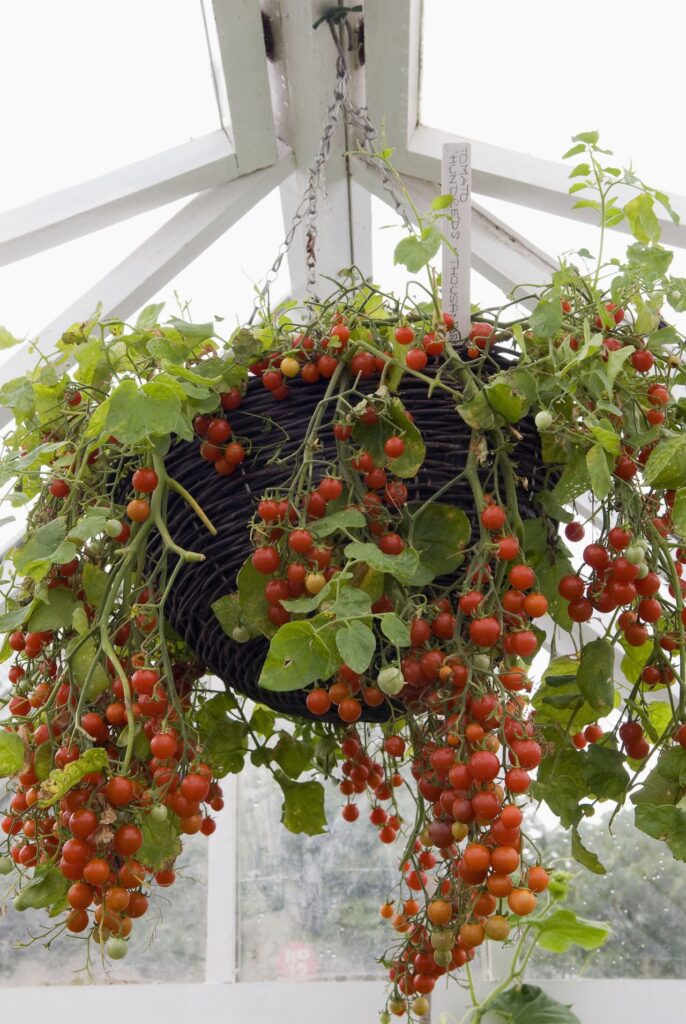
Hanging baskets aren’t just for flowers—they can be a functional and beautiful way to grow food, even in small spaces. Cherry tomatoes, strawberries, salad greens, peppers, radishes, and beans all adapt well to baskets, turning your patio or balcony into a productive mini-garden.
With the right care, these six vegetables will not only give you delicious harvests but also transform your hanging baskets into living, edible art pieces. Whether you’re short on ground space or simply want to try something new, vegetable-filled hanging baskets are a fun and rewarding way to bring fresh food closer to your kitchen.